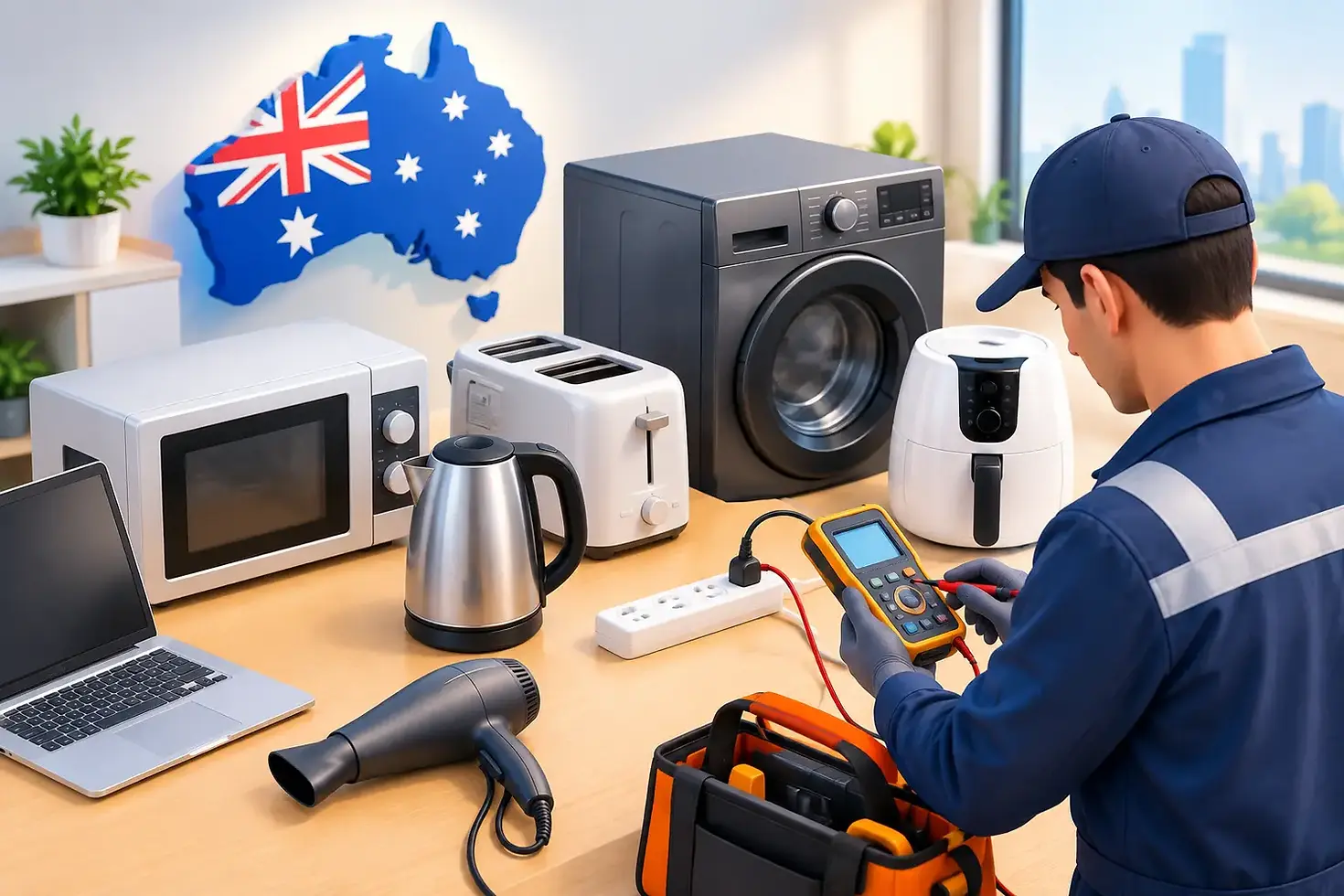
Who Needs Electrical Appliance Testing in Australia?

A damaged extension lead behind a reception desk, a cracked power tool in a workshop, or a borrowed kettle in a staff kitchen can create the same problem: an electrical fault that nobody spotted before it caused harm. So, who needs electrical appliance testing? Any person or business responsible for portable electrical equipment used at a workplace, rental property, shared site or public-facing premises should assess the need for regular inspection, testing and records.
Electrical appliance testing, commonly called test and tag, helps identify faults in in-service equipment before they become a shock, fire or downtime issue. It is not just about attaching a coloured tag. The job includes a visual inspection, electrical tests where required, clear identification and documentation that shows what was checked and when.
Who needs electrical appliance testing at work?
Australian work health and safety duties require businesses to provide and maintain a safe working environment. For most workplaces, that means electrical risks must be managed properly. Test and tag is one practical control for portable appliances, leads and tools that are regularly handled, moved or exposed to wear.
The exact requirement depends on the workplace, the equipment and the risk level. There is no one testing schedule that suits every site. A clean, low-traffic office has different risks from a construction site, commercial kitchen or factory floor. What does not change is the need to identify hazards and take reasonable steps to control them.
Businesses that should give electrical appliance testing close attention include offices, retail stores, workshops, warehouses, factories, medical practices, schools, hospitality venues and community facilities. If staff, contractors or customers use or can access portable electrical equipment, it needs to be part of the site safety plan.
Common items include computers, monitors, printers, kettles, microwaves, fridges, vacuum cleaners, fans, chargers, power boards, extension leads, machinery leads and hand-held tools. Equipment does not need to look damaged to have a fault. Internal wiring, earthing and insulation issues are not always visible from the outside.
Higher-risk workplaces need shorter testing cycles
Sites with rough conditions generally need more frequent inspections and testing. Construction and demolition sites are obvious examples because leads and tools are moved constantly, exposed to dust and moisture, and more likely to be dropped or damaged. Requirements for construction environments can differ from a standard office, so site-specific rules and AS/NZS 3012 requirements should be considered.
Workshops, industrial facilities, commercial kitchens, cleaning operations and outdoor work areas also carry a higher risk. Heat, water, chemicals, vibration, foot traffic and vehicle movement can quickly damage electrical equipment. A lead run across a walkway or under a roller door can fail long before the appliance at the other end shows any sign of trouble.
For these sites, testing should sit alongside practical controls such as safe lead management, appropriate power board use, routine visual checks and functioning safety switches. Testing is useful, but it does not replace good site habits.
Businesses supplying equipment to staff and contractors
If your business provides equipment, you are responsible for making sure it is safe for its intended use. This applies whether the item stays in one room or travels between jobs in a ute. Portable equipment used by maintenance teams, cleaners, tradespeople and mobile staff is particularly exposed to damage.
Contractors also need to manage their own tools and leads. Many commercial sites require contractors to show current test and tag records before starting work. Keeping equipment tested, labelled and documented avoids delays at sign-in and gives site managers confidence that basic electrical controls are in place.
Hiring out equipment creates the same responsibility. Tools, floor cleaners, portable lights and temporary leads should be checked between users and removed from service when damaged. A tag is not a guarantee that an item is safe forever. If a lead is cut, a plug is cracked or an appliance has been wet, it needs attention straight away, regardless of its tag date.
Landlords, property managers and short-stay operators
Landlords and property managers should understand the difference between portable appliances and fixed electrical installations. Portable appliances include items such as supplied kettles, microwaves, washing machines, portable heaters and extension leads. Fixed wiring, switchboards, hardwired ovens and installed lighting fall into a different category and may require a licensed electrician.
A blanket rule does not apply to every residential rental property in every state or territory. However, where a landlord provides portable electrical appliances, checking their condition is a sensible part of property maintenance. It is especially relevant in furnished rentals, serviced apartments, holiday accommodation, rooming houses and common areas of multi-unit properties.
Shared laundry equipment, communal kitchen appliances and cleaning equipment receive regular use from different people. They can be damaged without the owner knowing. Testing and keeping records gives property operators a clear maintenance trail and helps remove unsafe items before a tenant or guest uses them.
For commercial landlords, responsibilities can be shared between the building owner and tenant depending on the lease and what equipment is supplied. Clarify who maintains appliances in common areas, plant rooms, tenancy spaces and fit-outs. Leaving it vague is how maintenance jobs get missed.
Homeowners: when testing makes sense
Homeowners are not generally subject to the same workplace testing arrangements for ordinary household appliances. Still, electrical appliance testing can be worthwhile where a home is used for business, equipment is hired out, trades operate from the property, or there are shared facilities.
It can also be useful after water damage, renovation work, a suspected electrical issue or damage to leads and appliances. If equipment has been exposed to moisture, heat or impact, do not rely on a quick look. Stop using it until it has been checked.
A homeowner should never attempt electrical repairs unless qualified to do so. Replacing plugs, repairing leads and investigating electrical faults are jobs for the right person. The cost of a proper check is small compared with the risk of shock, fire or damaged equipment.
What test and tag covers - and what it does not
Test and tag normally applies to in-service portable electrical equipment. The process starts with a visual inspection because many problems are obvious: frayed leads, damaged plugs, loose wiring, burn marks, cracked casings or overloaded power boards. Electrical testing then checks relevant safety functions, such as earth continuity and insulation resistance, depending on the equipment type.
Items that pass are labelled with identification and a next-test date. Items that fail must be clearly taken out of service and repaired, replaced or disposed of. The record should identify the item, location, test date, result and tester details. This documentation is valuable during internal safety reviews, audits, incident investigations and contractor compliance checks.
Test and tag does not inspect fixed wiring, switchboards or every electrical risk on site. It also does not make poor equipment use acceptable. A tested extension lead can still become unsafe when overloaded, run through a puddle or crushed under equipment. Keep portable appliance testing as one part of a wider electrical safety program.
Setting the right testing frequency
Testing frequency should be based on risk, not guesswork. Consider where the item is used, how often it is moved, who uses it, whether it is exposed to harsh conditions and how serious a failure could be. A rarely moved computer in a secure office may need a different schedule from a grinder used daily on an active worksite.
AS/NZS 3760 provides guidance for inspecting and testing in-service electrical equipment, but site duties, client rules, insurer expectations and industry requirements can also affect the schedule. A practical provider will review the environment rather than apply the same interval to every appliance.
Between scheduled tests, staff should be encouraged to make simple visual checks before use. If something looks wrong, it probably is. Remove it from service, report it and have it assessed. Fast reporting prevents a minor damaged lead from becoming an injury, outage or fire claim.
For businesses managing more than one property service need, electrical safety testing can also be planned alongside routine maintenance work. Xtreme Maintenance provides comprehensive electrical safety testing and documentation with practical support for property upkeep, helping reduce the number of separate contractors to coordinate.
The best time to organise electrical appliance testing is before a damaged item causes a problem or a site audit exposes missing records. Start with the equipment people use every day, set a schedule that matches the site risk, and keep the paperwork clear enough to act on.


Comments